
25 March 2026
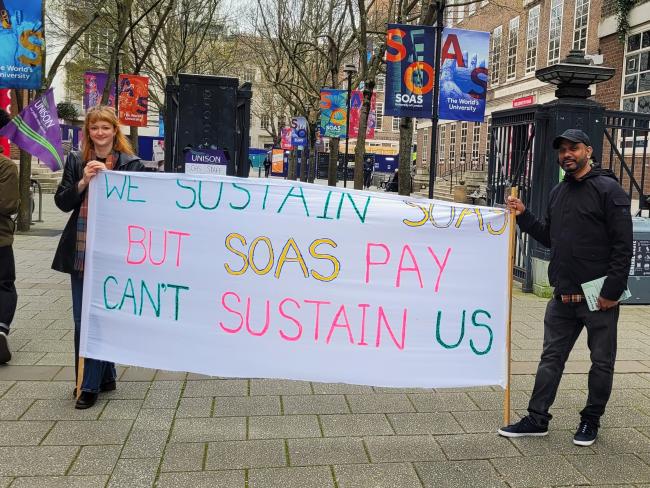
SOAS workers on strike for pay, Bloomsbury, London 24 March. Photo Workers.
University workers in London have rejected a pay offer they describe as “insulting”. Staff at SOAS University of London in Bloomsbury and at King’s College London’s Strand Campus have launched a series of strikes in pursuit of their claim.
Librarians, administrative and IT workers, and cleaners are among the workers taking part in the walkouts. The dispute centres on a proposed 1.4 per cent pay rise. Unison, their trade union, says this amounts to a real‑terms pay cut once inflation is taken into account.
Falling pay
According to the union, wage increases for university staff have failed to keep pace with inflation since the 2008 financial crash. Unison estimates that staff pay has fallen by 20 per cent in real terms over the past ten years.
Workers argue that the latest offer is especially insulting in the light of the current increase in household bills, following years of below‑inflation settlements. Mike Short, Unison’s head of education, said the situation reflects a long‑term pattern of declining wages.
Lowest
The first round of strike action took place on Tuesday 10 and Wednesday 11 March, after the employer’s body, the University and Colleges Employers Association (UCEA), put forward what the union say is the lowest annual pay uplift for staff since 2020.
The dispute continues with further walkouts in response to the low offer. SOAS staff took strike action on 24 and 25 March; KCL staff on 25 and 26 March.
Strikers talk to Workers
A few of those on strike at SOAS spoke to Workers on 24 March about the context of the dispute
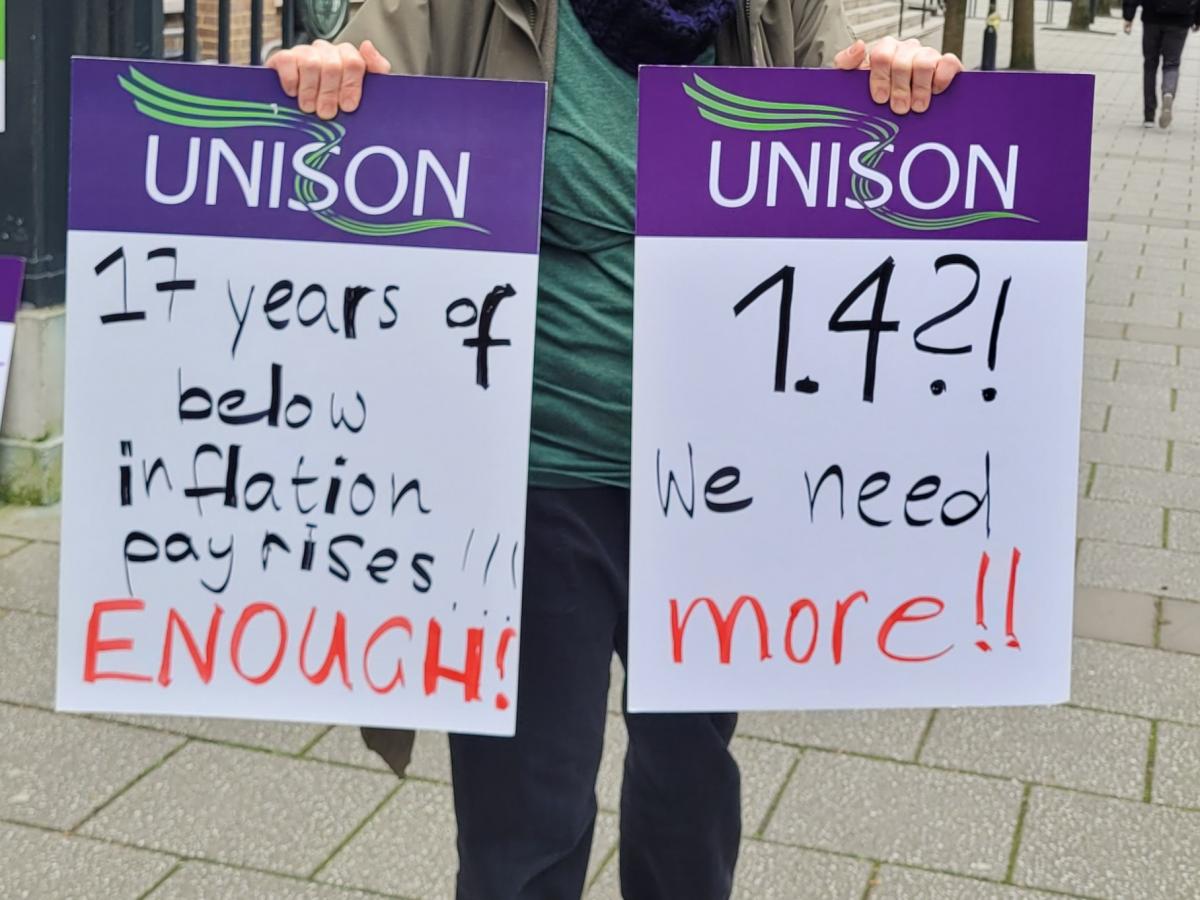
They explained the offered pay increase of 1.4 per cent isn’t enough to survive with the cost of living increasing again. They have endured 17 years of pay cuts, which they say has dropped real wages by around 30 per cent.
Their offer compares unfavourably with the general public sector increase of 3.8 per cent or the military with 5 per cent. They feel that the limited pay increase for the higher education sector is outrageous.
Concerns
And they expressed wider concerns about reduced funding and cutting facilities across the higher education sector. It will be harder for students to access HE and acquire the education and skills they need.
Academic staff are also struggling with both employment and surviving; this makes running the universities more difficult. On top of that, students are also demanding more from the university.
‘Employers are purposely not listening to the needs of their workers.’
The feeling is that the employers (represented by the UCEA) are purposely not listening to the needs and demands of their workers.
UCEA offers financial excuses why they can’t meet what their staff claim, while in the boardroom they made successful profits for the financial year.
Necessities
For the lowest pay grades, the increase would be £200 a year, far from keeping up with price increases to basic necessities.
Overall, the message from those we spoke to is that they strike not because they want to, but they have to. And as one worker said, they are also fighting for the right to higher education and employment, not just for reasonable pay.