
The government has come up with a new strategy for critical minerals, abandoning the previous one. But it will take action to make the strategy a reality…
Hailed as an “Industrial Renaissance”, the government’s Critical Minerals Strategy, Vision 2035, was launched in November. Industry minister Chris McDonald linked it to Labour’s industrial strategy, published last June, which he called “a blueprint for 10 years sustained economic growth”.
In its language at least, if not yet in practice, this is a step forward from the previous strategy. Now abandoned, it lacked any sense of industrial purpose. And while critical minerals are key to modern industry, action is needed to make this new strategy a reality.
The strategy’s central aim is to end overreliance on imports of minerals such as copper, lithium, nickel and rare earths. The government wants to ensure that no more than 60 per cent of the Britain’s supply of any one critical mineral is imported from any single country by 2035.
Building on advice from the UK Energy Research Council (ERC) at Imperial College, and assessment by the Critical Minerals Intelligence Centre (CMIC) in 2024, the government has compiled two new lists, comprising “growth minerals” and “critical minerals”. And there’s a third list of minerals expected to become critical in the future. Almost all have to be imported.
There is overlap, and inevitable confusion, between critical and growth minerals lists. The strategy explains that some growth sectors depend on minerals which are not currently assessed to be critical. These include beryllium used in aerospace and defence, chromium (aerospace), copper (advanced manufacturing, clean energy), uranium (defence and nuclear), and graphite (automotive).
Supply chains
In a November 2024 webinar about minerals specifically critical to Britain, CMIC director Dr Gavin Mudd listed those at risk through disruption to supply chains, war, and other global shocks. They included: cobalt, a critical growth mineral indispensable in making jet engines and turbines; vanadium, critical as it is used to strengthen steel; and lithium, critical for growth.
What do experts mean by critical? In the context of materials and their sources, cobalt illustrates three criteria for criticality. First and most important is unique strength; without cobalt there could be no jet aircraft.
Aerospace manufacturers have experimented with substitutes. But, as the Cobalt Development Institute told parliament, “It is notoriously difficult to substitute for cobalt without suffering serious reductions in efficiency and performance”.
The second reason is country of origin. About three-quarters of the world’s cobalt comes from the Democratic Republic of the Congo, where armed militias use it to fund their operations. The third reason is export tariffs, subject to the whims and needs of other governments.
Other minerals listed as both critical and growth include aluminium, manganese, nickel, platinum group metals, rare earths, silicon, tin, titanium and tungsten. Critical-only minerals include bismuth, iron, magnesium, niobium, phosphorus, sodium compounds and zinc.
The ERC urged government to differentiate between minerals for rapid decarbonisation and those needed for long-term resilience. And to differentiate between supply chains contributing to net zero, and those unrelated to net zero policy.
The minister was rightly emphatic about the centrality of critical minerals to industry today, “Without them our lives would grind to a halt. Industries would shut down overnight and communities would not be able to function”.
Between now and 2035 it has been estimated that, yearly demand for copper will almost double in Britain, and demand for lithium will increase tenfold. Europe’s largest lithium deposit is in Cornwall. The aim is for Britain to produce at least 50,000 tonnes by 2035.
Potential
With its world-famous Camborne School of Mines, Cornwall has potential to be part of a thriving supply chain in high grade tin and tungsten. Tin production is dominated by China, Myanmar and Indonesia, but there is currently no tin mining in Europe or North America.
While it is unrealistic to think Britain could provide for all its own mineral needs, there are good reasons to develop domestic capabilities as far as possible. MacDonald cites North East England and Wales as prime examples of Britain’s strength in mining, refining and recycling critical minerals.
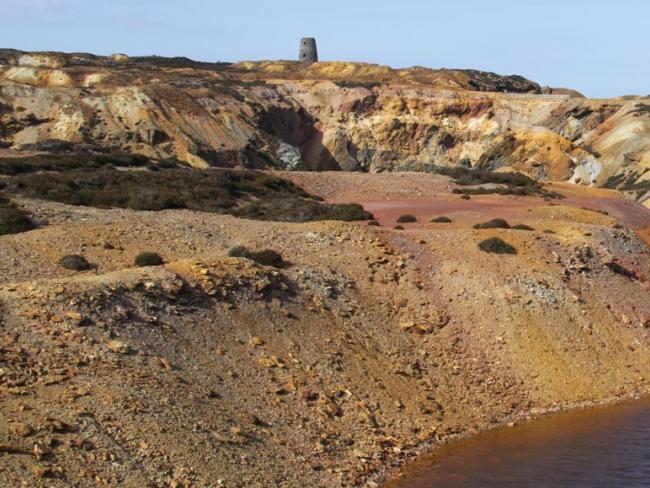
In Wales, Anglesey Mining is developing the Parys Mountain site, yielding deposits of zinc, copper, lead, silver and gold. One of the largest nickel refineries in Europe is in Clydach, Swansea. And there is exploration for rare earths in the North Pennines. All potential that needs to be nurtured.
Labour promises to support investment, alongside local councils and the private sector. Through the National Wealth Fund, created for such purposes with Treasury reserves, it has begun investing in the South West England “critical minerals cluster” for tin and lithium.
In Feb 2025 the government announced investment of £28 billion in Cornish Tin and £54 million in Cornish Lithium, plus £24 million from the UK Infrastructure Bank for “opportunities to anchor important supply chains” here.
Also hoping for government support is the Hemerdon tin and tungsten mine in South Devon. Reliance on the private sector is said to have been frustrating. Although it is the second largest such mine in the world after China, which produces 80 per cent of world supply, Hemerdon has been operating at a loss.
The ERC pointed out that the private critical minerals sector was beyond direct government control. Britain was outgunned by other countries in the level of state support received. It suggested that a critical mineral fund is required; the strategy promises to do just that.
Firms like Tungsten Alloys and Tungsten Engineering in Warwickshire supply specialist stainless steel for pharmaceuticals and for ensuring food hygiene, for surface finishes and plating, welding tubular frames in vehicles and bicycles, folding and bending tubes.
Ongoing financial support for minerals like tin and tungsten is not, however, guaranteed. The strategy simply says, “We are exploring future support for these critical and growth minerals”. That won’t be enough.
Digging stuff out of the ground does not in itself translate into growth. And as though to put us off the scent, the government uses the word production interchangeably with processing and refining.
Labour’s self-proclaimed “Growth Mission” – making Britain “a world leader in technological innovation”, “a clean energy superpower” and so on – will need to be more than hyperbole and empty slogans. We’ve seen all too many of them.
‘British manufacturers and workers need not only to process raw materials, but to transform them into the manufactured products necessary to sustain modern Britain…’
Instead, British manufacturers and workers need not only to process raw materials, but to transform them into the smartphones and computers, ceramics and turbines, and all the manufactured products necessary to sustain modern Britain.
Governments worldwide are searching for reliable partnerships other than with China. The focus is on security of supply, leveraging investment, and promoting responsible mining.
Inevitably the Labour government’s aims are set out in yet another strategy – on trade. This includes deals already struck with Australia, Canada, Japan, Kazakhstan, Indonesia, Mongolia, South Africa and Saudi Arabia, and a landmark agreement with India. Most are mineral-specific non-binding agreements.
Attempts to embed such agreements within more comprehensive trade deals are fraught with risk in the hands of a weak negotiator like Starmer. As his “reset” with the EU has shown, he gives away more than he takes.
If Britain is to develop as a manufacturing country, we would need to retain our own resources, based on analysis of our own needs, not trade away our metals, along with other assets.