
28 January 2026
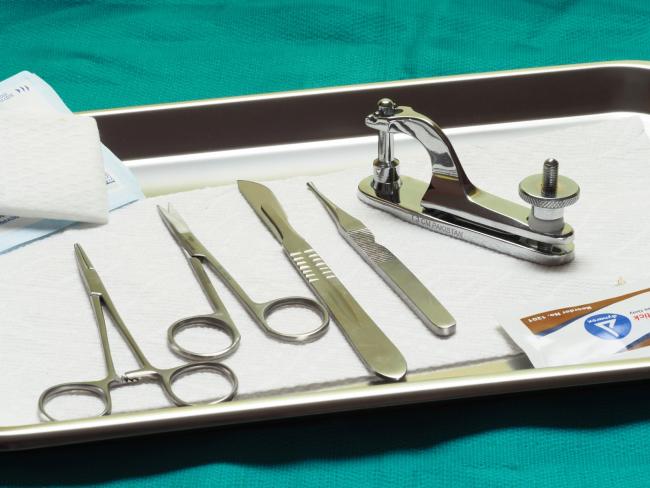
Surgical instruments used for infant circumcision. Photo Dan Bollinger via Wikimedia Commons (CC BY-SA 4.0).
A West London coroner has issued a stark call for government action after the death of a six‑month‑old boy. He urged ministers to finally introduce national rules governing non‑therapeutic male circumcision – a practice that remains almost entirely unregulated in Britain.
Non‑therapeutic circumcision is carried out for cultural or religious reasons rather than medical necessity. It involves removing the foreskin of infants or young boys.
Invasive
Despite being an invasive surgical procedure, it can legally be performed by individuals with no medical qualifications, no formal oversight, and no obligation to follow clinical standards.
According to the West London Coroner’s report, baby Mohamed Abdisamad underwent circumcision on 12 February 2023 by a practitioner recommended to his parents. Within days he became unwell. Seven days later he was taken by ambulance to Hillingdon Hospital, where he suffered a cardiorespiratory arrest and died shortly before midnight.
Directly linked
A jury inquest concluded in October 2025 that Mohamed died from an invasive streptococcus pyogenes infection – postoperative sepsis directly linked to the circumcision.
‘The absence of basic safeguards leaves children at risk.’
Assistant Coroner Anton van Dellen has now issued a “Prevention of Future Deaths” report to the Department of Health and Social Care. This gives a warning that the absence of basic safeguards and regulatory oversight leaves children at ongoing risk.
Vacuum
These findings highlight a regulatory vacuum: no national standards, no training or accreditation requirements, no record‑keeping, no infection‑control rules, and no formal consent procedures. He feared that more children may unless action is taken.
The report was sent to the Department of Health and Social Care and the Ministry of Housing, Communities and Local Government: they have 56 days to respond. Copies have also been shared with Mohamed’s parents, his grandmother, his uncle, and the London Ambulance Service.
Repeated failures
Mohamed’s death is not an isolated tragedy; there have been repeated failures. Over the past decade, at least seven children in Britain have died following circumcision, with many more suffering serious injuries.
In 2010, baby Goodluck Caubergs died after a midwife removed his foreskin using scissors. In 2012, a rabbi performing a community circumcision caused fatal injuries to baby Angelo Ofori‑Mintah. Both infants died from severe blood loss within 48 hours.
Inconsistencies
The legal outcomes of these cases exposed striking inconsistencies. The midwife, Grace Adeleye, was convicted of manslaughter but did not receive a prison sentence. The rabbi, Mordechai Cohen, was told by a deputy coroner that he was “entirely blameless” and that the death was an unfortunate accident.
It is unclear whether the absence of any regulatory system for community circumcisions was discussed during the PRUDIC (procedures related to unexpected death in childhood) multidisciplinary meeting that followed. That review is supposed to take measures to prevent unnecessary death or injury to children.
No reform
Despite these deaths, no justice, no regulatory reforms followed, and community circumcisions continued without oversight.
The foreskin has important physical, sensory, and sexual functions, and that circumcision can lead to a range of complications. In the face of this, governments and medical bodies have repeatedly refused to create a regulatory framework that could reduce the risks associated with non medical circumcisions.
Harm
Two separate court cases in 2025 again brought the issue into public view. Both defendants received prison sentences for causing serious harm to children during community circumcisions, and both judges independently called for urgent regulation.
One man, Mohammed Alazawi, falsely claimed to be a doctor and administered prescription‑only medicines illegally despite being unable to read English. The other, former NHS paediatric surgeon Mohammad Siddiqui, had been struck off by the General Medical Council in 2015 for unsafe circumcision practices.
Loophole
Yet after being removed from the medical registry Siddiqui was still legally able to continue performing circumcisions as an unregulated layperson. This loophole, where losing a medical licence removes oversight rather than restricting practice, was described in court as indefensible.
‘The government has consistently declined to introduce regulation.’
Despite repeated warnings from coroners, judges, and medical professionals, the government has consistently declined to introduce regulation. In early 2025, officials stated that non‑therapeutic circumcision fell outside the Ministry of Justice’s remit.
Later that year, the minster for patient safety and primary care confirmed that government had “no plans” to amend the current framework, even for procedures carried out without anaesthetic.
This stance has become even harder to justify following Mohamed’s death. The lack of safeguards stands in stark contrast to wider child‑protection standards. Across the country even minor medical procedures require strict consent, hygiene, and professional accountability.