
23 April 2026
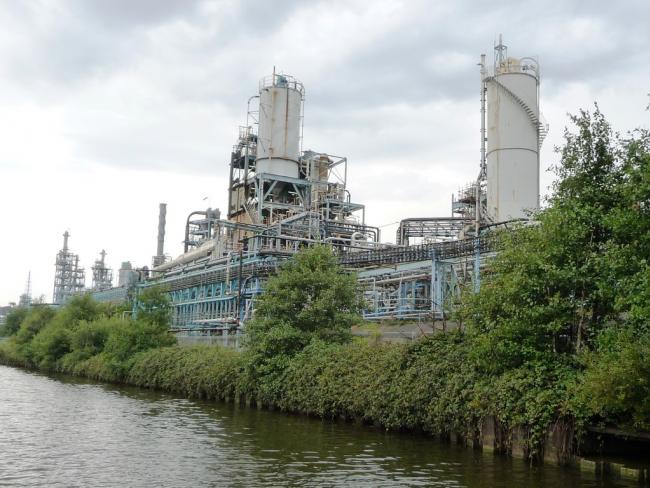
INEOS Runcorn salt works in Cheshire, under threat. Photo Christine Johnstone / geograph.org.uk (CC BY-SA 2.0).
At a time when reliance on imports seems increasingly unwise, Britain faces becoming an importer rather than an exporter of salt, a vital mineral.
Throughout the nineteenth and twentieth centuries, and until recently, Britain exported salt to the world, produced by evaporation in pans, or by mining, an industry based chiefly in Cheshire. According to the British Geological Survey, we have “huge reserves” of salt.
Closure
The future of one of the two remaining salt production plants is under threat. Inovyn, a subsidiary of Ineos, proposes to close its Runcorn plant. The other major plant, British Salt, is owned by Tata, whose track record on steel does not inspire confidence.
Apart from use in food production and in de-icing roads (with rock salt from Winsford), salt is fundamental to chemical industries for the production of chlorine, caustic soda and soda ash. ICI, the leading chemical industrial concern in the twentieth century, started life as Brunner Mond, based at the Winnington works in Northwich.
Ancient
The roots of salt production in this area are ancient. When Roman invaders reached Cheshire in around AD 60, they found salt working well-established by the Iron Age inhabitants. The ancient Britons produced salt by boiling at sites in Lincolnshire and Cheshire.
The Romans based their salt production chiefly in Cheshire; it survived the collapse of Roman rule and is mentioned in Domesday Book. The “-wich” suffix in medieval place-names, such as Middlewich, Nantwich and Droitwich, was adopted to refer to salt-producing towns.