
23 February 2026
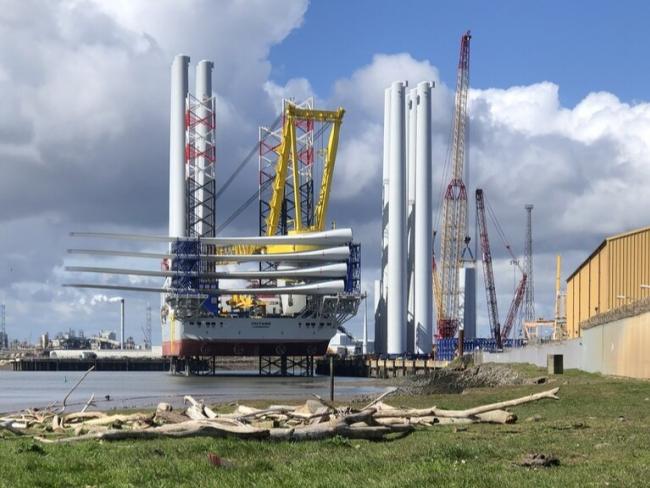
Able Seaton Port, Hartlepool is acting as a marshalling and construction hub for the 277 giant wind turbines to be used in the Dogger Bank wind farms. Photo David Robinson / geograph.org.uk (CC BY-SA 2.0).
The government plans energy links with other countries linked to an big increase in offshore wind electricity generation. The claimed benefits may not materialise.
On 26 January, Energy Secretary Ed Miliband signed a new clean energy security pact – the Hamburg Declaration – with energy ministers from France, Germany, Belgium, Denmark, Iceland, Luxembourg, the Netherlands, Norway and Ireland.
Pledge
They pledged that together their countries would instal 100 gigawatts offshore wind capacity. This means building an estimated 10,000 wind turbines across the North Sea from the coasts of Denmark to Yorkshire.
This would more than double the amount of offshore wind energy being produced in Europe. The Global Wind Energy Council puts the current level of offshore wind capacity globally at 83 gigawatts.
Current projects
By comparison, the largest set of offshore windfarm projects currently is Dogger Bank in the North Sea. The first three phases when complete are projected to include around 270 turbines with an overall capacity of 3.6 gigawatts. Further developments at Dogger Bank D and Sofia would add 2.7 gigawatts capacity.
Undoubtedly great technically achievements, the question over offshore windfarms is whether they will serve Britain or a global energy market.
Power markets
The high cost of energy concerns businesses and households. But such pan-European energy projects could push prices up as operators compare power markets in different countries and sell to those with the highest prices.
This happened with an energy link between the UK and Norway. It acted as a “price infection” mechanism that imported high UK and European electricity prices into Norway’s domestic market.
Domestic need
Britain’s National Grid had been pushing plans to link North Sea turbines to these other European countries, rather than supplying domestic need.
Miliband’s claim that the deal would “give us energy sovereignty and abundance” is tenuous. What seems to be planned is to tie Britain to a wider electricity market, quite the opposite.