
23 June 2026
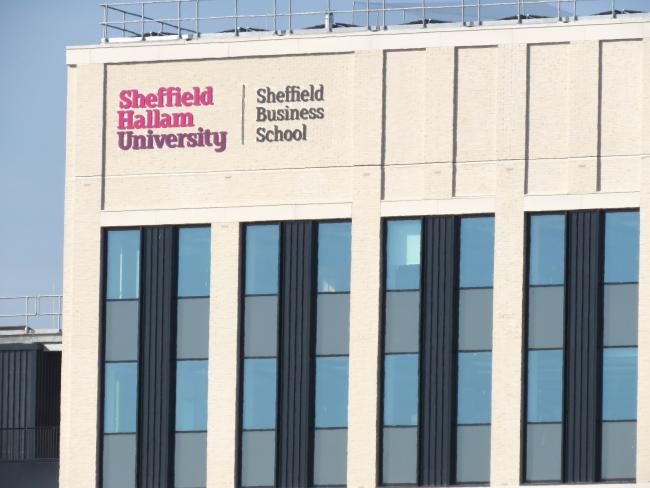
Sheffield Hallam University says cuts are unavoidable. UCU members there aren’t buying it, and have proved their point. Photo Workers.
A dispute at Sheffield Hallam University involving lecturers in the University & College Union (UCU) has been resolved – at least for now – following 13 days of solid strike action during May and June.
The employer scrapped plans to move most academic staff to a wholly owned subsidiary company to create a multi-tier workforce and evade the university’s legal obligation to provide its teaching staff with access to the Teachers’ Pension Scheme.
Around 73 per cent of UCU members voted in a ballot for action, with 88 per cent of those voting for strike action and 93 per cent for action short of a strike. This had resulted in a planned 18 days of strikes.
Unstable finances
As reported in Workers in November 2025, the finances of many of Britain’s universities are becoming progressively unstable, sliding deeper and deeper into debt.
Hallam University is attempting to save £27 million by the end of the current academic year, following two years of cuts that have already seen over 1,000 staff leave the university. The university claimed that its proposals were unavoidable in order to secure financial sustainability.
Short-sighted
The union does not accept this. It stated that the proposals were short-sighted and would condemn the university to a death spiral of decreasing education quality, declining student numbers and an inability to attract and retain talented staff.
UCU general secretary Jo Grady said, “We welcome the decision of Sheffield Hallam to keep staff employed by the university and in their pension scheme, but they must now rule out compulsory redundancies.”
Sustained action
Grady argued that UCU members should never have been forced to go on strike. She concluded, “…sustained action shows that we will fight for fair working conditions and not stand by and allow management to gut this university in an attempt to save money.”
The UCU strikes at Hallam are the latest in a series of disputes over the past three years. The university has reduced the quality of its teaching by cutting jobs and casualising many staff, as well as attacking the conditions of employment of teaching staff.